The transition from the flatlands of the Ontario basin into the foothills of the San Gabriel Mountains creates a unique stability challenge. Here, alluvial fan deposits meet decomposed granite bedrock, and the City of Ontario's grading ordinance demands rigorous documentation before any hillside permit is issued. A proper slope stability analysis does more than satisfy plan check. It reveals the true factor of safety against rotational failure, particularly in the silty sands left behind by ancient creek beds that cross the northern edge of the city. Our team integrates subsurface data from test pits with laboratory shear strength results to model conditions that generic software assumptions miss. We've seen too many projects stall at the Ontario Building Department because the geotechnical report treated the slope as a textbook case instead of a site-specific problem. When groundwater perched above the weathered rock interface triggers seasonal movement, the difference between a 1.2 and a 1.5 factor of safety becomes the difference between a stable subdivision and a recurring maintenance nightmare.
A 1.5 static factor of safety means nothing if the pseudo-static analysis under ASCE 7 seismic loads drops it below 1.1 for the design earthquake.
Technical details of the service in Ontario California
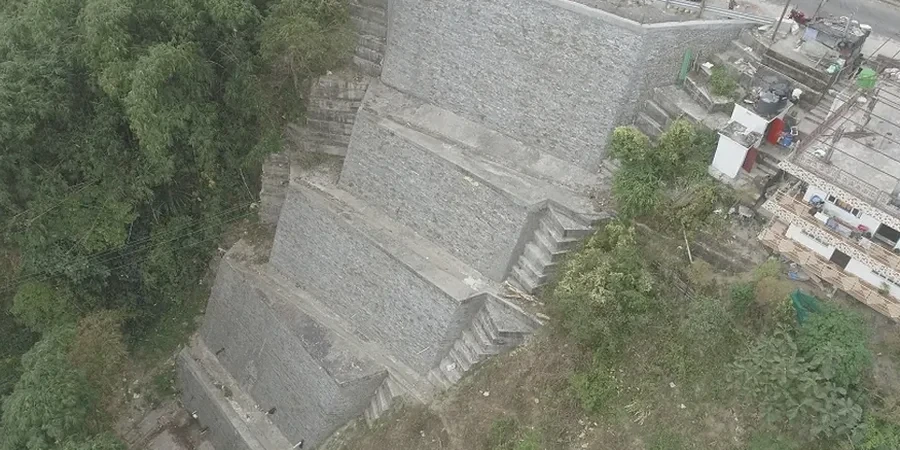
Critical ground factors in Ontario California
The most common mistake we see on Ontario hillside jobs is the contractor who assumes a 1:1 cut ratio will stand up through the rainy season without evaluation. January storms in the Inland Empire can dump 2 inches of rain in 24 hours, saturating the upper 4 feet of slope and triggering shallow sloughing that undermines foundation setbacks. We've been called to three sites in the past two years where this exact scenario played out, always between December and March. The fix costs triple what the original analysis would have. Another recurring problem: ignoring the surcharge from adjacent existing homes when analyzing a downslope lot. That load transfers through the soil mass and rotates the critical failure circle closer to the cut face. Our reports always include sensitivity analysis with and without adjacent structure loads, because the Ontario Building Department reviewers will ask for it, and more importantly, because it matters for the homeowner above who doesn't want their patio sliding into the neighbor's pool.
Our services
Our slope stability work in Ontario covers the full range from preliminary feasibility to forensic investigation. Each scope gets tailored to the specific hillside condition and the phase of the project.
New Development Slope Analysis
Complete static and pseudo-static stability modeling for proposed cut and fill slopes, tied to the Ontario tentative tract map submittal requirements.
Retaining Wall Global Stability
Evaluation of overall slope stability behind and below proposed retaining structures, ensuring the wall itself is not undermined by deep-seated failure surfaces.
Existing Slope Condition Assessment
Forensic review of older graded slopes showing signs of distress, including tension cracks, toe bulging, or drainage structure damage, with repair recommendations.
Grading Plan Peer Review
Third-party review of geotechnical and grading plans for Ontario plan check, verifying that design assumptions match site-specific subsurface conditions.
Questions and answers
How much does a slope stability analysis cost for a single-family lot in Ontario?
For a typical single-family hillside lot in Ontario, the stability analysis ranges from US$1,250 to US$3,570 depending on whether we need new subsurface exploration or can use existing geotechnical data. The fee includes the limit equilibrium modeling, the seismic pseudo-static check per ASCE 7, and the stamped report suitable for Ontario Building Department submittal.
What triggers a slope stability analysis requirement in Ontario?
The Ontario grading ordinance triggers the requirement when a proposed cut or fill exceeds 5 feet in vertical height, when the natural slope is steeper than 3:1, or when the building pad is within 50 feet of a slope crest. The IBC also requires it for any structure assigned to Seismic Design Category D or higher, which includes most of Ontario given the proximity to active faults.
How long does the analysis take from start to finish?
With site investigation already complete, the stability modeling and report preparation typically takes 7 to 10 business days. If we need to drill and sample first, add 2 to 3 weeks to account for laboratory shear strength testing on the recovered samples.
What laboratory tests are needed for the analysis?
We need the effective shear strength parameters (cohesion and friction angle) from either consolidated-undrained triaxial tests with pore pressure measurement per ASTM D4767, or direct shear tests per ASTM D3080. We also run Atterberg limits and grain-size distribution to classify the soils per ASTM D2487, which helps validate the strength parameters against published correlations.
Do you handle the Ontario plan check submittal process?
Yes, we prepare the slope stability report to meet Ontario Building Department standards, including the required digital submittal format, and we respond to plan check comments through approval. We've been through this process on projects from the Archibald Ranch area to the newer subdivisions north of the 210.