The biggest mistake we see in Ontario is treating the whole city like one uniform soil profile. Drive north toward the foothills and you hit dense alluvium. Move south toward the old agricultural belt and the sandy layers get loose. Really loose. We have tested sites where the SPT N-value drops below 8 at just 10 feet down. A standard shallow footing design on that soil fails differential settlement criteria fast. That is where vibrocompaction design changes the equation. We specify vibratory probe depth, grid spacing, and hold time based on site-specific stratigraphy. Not a generic chart. This work often runs parallel to a CPT test program to verify densification in real time, especially where silty fines blur the sand behavior. In Ontario, the water table can sit high during wet winters, and that changes the vibratory response. Our design accounts for that. It has to.
A 10 Hz change in vibrator frequency can double the densification radius in Ontario’s clean alluvial sands. The right frequency is never in a manual.
Technical details of the service in Ontario California
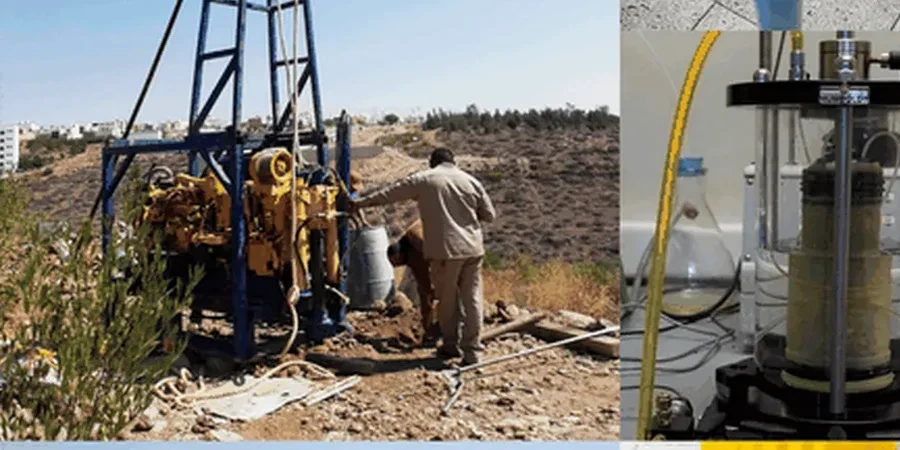
Critical ground factors in Ontario California
In Ontario, many older commercial sites sit on former agricultural land with undocumented fill. We have pulled vibro probes down and hit buried concrete, irrigation pipe, and once a buried pickup truck. That is not a joke. The geophysical survey is not optional here. Another pattern: the Santa Ana winds dry out the upper 3 feet of sand, creating a crust that looks competent in a shallow test pit. Below that crust, the sand is loose to a depth of 20 feet. If the vibrocompaction design assumes uniform density from the surface, the lower lifts never reach target density. We always run a MASW survey before finalizing the grid. It gives us a shear wave velocity profile that catches those hidden loose zones. The cost of skipping that step shows up as differential settlement five years later. Ontario building officials know the local geology, and they will ask for the pre- and post-treatment data.
Our services
We provide vibrocompaction design as part of a broader ground improvement package. The three core services below reflect what Ontario projects most often need.
Vibrocompaction Design Package
Complete design including probe depth matrix, grid layout, frequency protocol, and lift schedule. Delivered with construction-phase observation and CPT verification.
Pre-Treatment Site Characterization
Geophysical surveys (MASW, seismic refraction) and intrusive testing (CPT, SPT) to map the subsurface before densification. Identifies fill, water table, and loose zones.
Post-Treatment Verification Testing
CPT soundings, SPT borings, and settlement monitoring to confirm the design achieved target relative density. Documentation for building official sign-off.
Questions and answers
What soil types in Ontario California respond best to vibrocompaction?
Clean sands and silty sands with fines below 12-15% respond best. Much of Ontario’s alluvial plain fits this description. Soils with more than 20% silt or any clay content require a different technique, usually stone columns or rigid inclusions. We run a grain size analysis on every project to confirm suitability before design begins.
How deep can vibrocompaction treat soil in this area?
Standard equipment reaches 75 feet. That covers most Ontario sites. With probe extensions and a more powerful vibrator, we can push to 100 feet. Depth matters because some of the loose sand deposits near the Santa Ana River corridor extend well below 40 feet. We match the probe length to the actual deposit thickness, not a budget assumption.
What is the typical cost range for vibrocompaction design and execution in Ontario?
Design alone typically ranges from US$1,280 to US$5,650 depending on site size and complexity. Full execution cost depends on grid spacing, depth, and access conditions. We provide a detailed estimate after reviewing the geotechnical baseline report and site constraints.
How do you verify that the ground improvement worked?
We run CPT soundings at the centroid of the treatment grid and compare them to pre-treatment data. The cone tip resistance should show a clear increase. We also run SPTs for correlation and sometimes pressuremeter tests for modulus. The IBC requires verification testing before foundation construction begins.
Does vibrocompaction work if the water table is high?
Yes, and sometimes it works better. Saturated sand liquefies temporarily under vibration, which helps the particles rearrange into a denser state. The key is controlling the vibration energy so the soil densifies rather than displaces laterally. Ontario’s winter water table is a factor we design for, not a problem we avoid.