Ontario's growth from a citrus colony to a major logistics hub has reshaped more than just the skyline. The southern part of the city sits on younger alluvial fans washed down from the San Gabriel Mountains, while older terrace deposits dominate the northern reaches. This geologic patchwork creates a complicated bearing surface for any project. Footings designed for sandy loam can fail unexpectedly when they hit the dense, cemented hardpan pockets that dot the area. The city’s 68,000 housing units and expanding warehouse districts demand a foundation approach that actually accounts for this variability. Our work bridges the gap between the rancher-era rule of thumb and modern code-driven performance. We lean on ASTM D1586 correlations and local excavation experience to size foundations that settle evenly and handle Ontario’s occasional seismic jolt without over-engineering the concrete bill.
Settlement in Ontario's layered alluvium is rarely uniform. We size the footing for differential movement, not just total load.
Technical details of the service in Ontario California
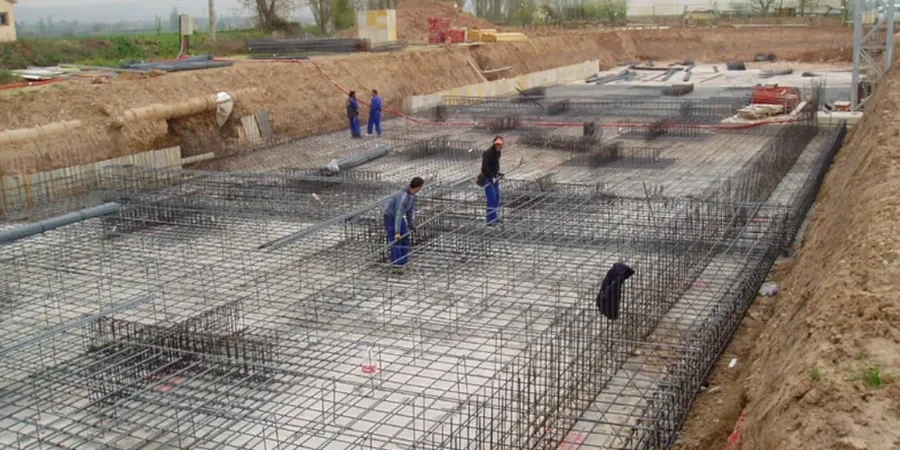
Critical ground factors in Ontario California
A common mistake Ontario contractors make is placing a standard strip footing on undisturbed-looking ground without checking for old agricultural deep-ripping. Much of the city was citrus groves, and deep ripping fractured the soil down to three feet in certain parcels. A footing bearing at 18 inches on ripped ground acts like it is sitting on a loose fill cushion, leading to excessive settlement before the structure is even framed. The repair costs from differential movement in a tilt-up panel line can run six figures and delay certificate of occupancy by months. We verify the soil profile with test pits or a shallow boring exactly at the column line so the structural team knows whether to deepen the footing or recompact the bearing stratum. It is a small upfront cost compared to the risk of a failed slab pour in Ontario’s fast-track industrial market.
Our services
Our foundation scope for Ontario projects fits within typical design-build schedules and addresses the two dominant construction types in the city: residential subdivisions and logistics centers.
Residential Spread Footing Design
We engineer isolated and continuous footings for single-family and multi-family tracts, targeting a balanced cut-fill condition. Our reports provide the geotechnical parameters Ontario building officials expect, including allowable bearing and lateral resistance for the typical two-story wood-frame envelope.
Commercial Mat Foundation Evaluation
For Ontario's concrete tilt-up warehouses, we analyze mat behavior on the alluvial fan profile. We deliver modulus of subgrade reaction values and settlement estimates under heavy racking loads, keeping the slab performance within ACI 360 tolerances.
Questions and answers
What does a shallow foundation design package cost for an Ontario commercial lot?
For a standard commercial lot in Ontario, you are typically looking at a range from US$2,140 to US$2,910. The final number depends on the number of borings required to cover the building footprint and whether we need to add a plate load test for a mat foundation. We provide a fixed-fee proposal after reviewing the site address and structural loads.
How deep do footings need to go in Ontario to get past the bad soil?
Most Ontario sites achieve competent bearing between 18 and 24 inches below finished grade. However, in areas that were previously deep-ripped for citrus farming, we occasionally specify a deepening to 36 inches or recommend a controlled compacted fill pad to bridge the fractured zone. We make that call based on the boring log, not a blanket rule.
Can you use the IBC presumptive bearing values for Ontario soil?
You can, but it is risky. The IBC presumptive values are conservative and generic. Relying on them without a site-specific boring often leaves money on the table in good ground or, worse, misses a soft pocket that causes settlement. We run the calculations per IBC Chapter 18 but base the input parameters on actual field data from the lot, which usually yields a more accurate and economical footing size.
Does Ontario have expansive soil issues that affect shallow foundations?
Expansive potential in Ontario is generally low to moderate compared to other parts of the Inland Empire. The alluvial fan soils are typically granular silty sands, not high-plasticity clays. Still, we run Atterberg limits on the fines fraction to confirm that no isolated clay seams exist, especially on sites near the old irrigation canal alignments.