When the developer of a new warehouse complex off Vineyard Avenue hit saturated silty sand at just 12 feet during a routine geotech survey, the project nearly stalled. The concern wasn't bearing capacity in the traditional sense, it was the potential for the ground to temporarily turn into a heavy liquid during a sizeable earthquake. Ontario sits squarely in a basin with a high water table in many areas, and the alluvial deposits from the Cucamonga washes create classic conditions for cyclic mobility. Our laboratory is frequently called in at this exact juncture to perform a detailed soil liquefaction analysis. It is not just a checkbox for the building department; it is a forensic look at how your site will behave under seismic loading. We start with the raw data from the SPT drilling reports and the fines content classification to build a complete picture of the soil's resistance to pore pressure buildup.
A standard bearing capacity report won't catch the transient loss of soil strength—liquefaction analysis is what separates a resilient foundation from a future insurance claim.
Technical details of the service in Ontario California
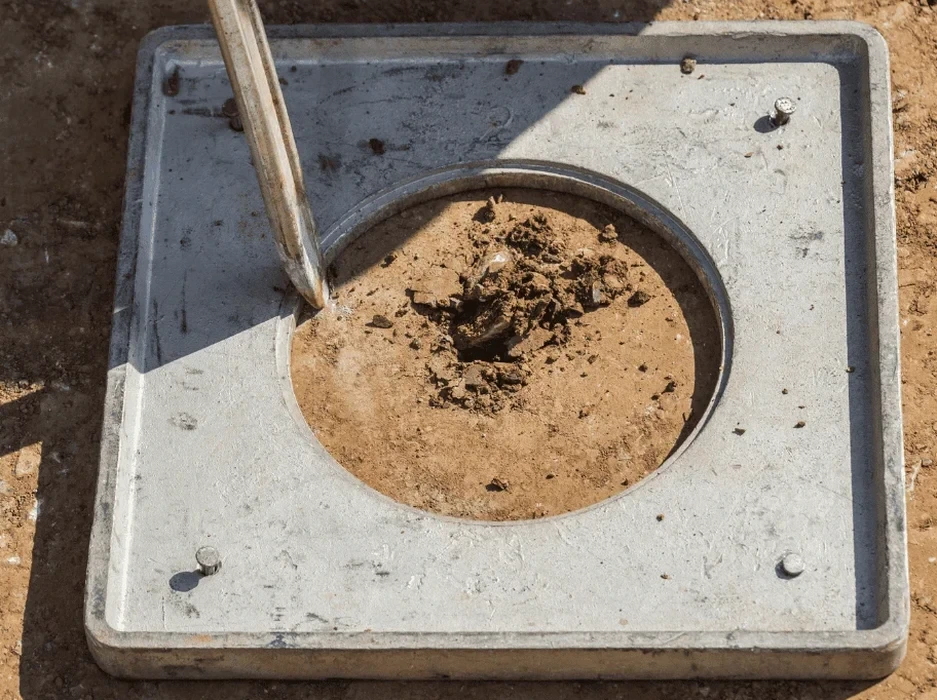
Critical ground factors in Ontario California
One thing we observe repeatedly in the Ontario Ranch and southern industrial zones is that contractors sometimes assume dense alluvial gravels are immune to liquefaction. That is a dangerous oversimplification. Often, these gravels are matrix-supported, meaning the fine-grained sand and silt between the clasts will govern the pore pressure response. If the silty matrix liquefies, you lose the confinement around the gravel, and the whole mass can settle dramatically. Ignoring this because a visual inspection of the spoils looks 'rocky' is a mistake we have helped structural engineers untangle after foundation distress appeared. The other local headache is differential settlement; a slight change in the sedimentary layer thickness across a large warehouse footprint can cause the slab to tilt post-earthquake, snapping utility connections. A proper soil liquefaction analysis maps these subtle transitions so you can either avoid them or design a rigid mat foundation to bridge the soft spots.
Our services
Beyond the standard evaluation, we provide site-specific engineering analysis tailored to the Ontario building code requirements and the site's proximity to the Cucamonga fault zone. These services bracket the full scope of the liquefaction problem.
Cyclic Stress Ratio (CSR) & Factor of Safety Calculation
We compute the CSR profile using the design PGA and total overburden stress, reducing it by the stress reduction coefficient (rd). The CRR is determined from the corrected blow count (N1,60cs) and fines content. We deliver a factor of safety at each sublayer depth, typically requiring a minimum FOS of 1.1 to 1.3 per IBC, depending on the risk category of your structure.
Post-Liquefaction Settlement & Lateral Spreading Analysis
Using the empirical charts from Ishihara and Yoshimine, we estimate the reconsolidation volumetric strain for each liquefied layer. We integrate this strain to give you a total anticipated settlement. For sites near the gentle slopes of the Jurupa Mountains or drainage channels, we also evaluate lateral spreading displacement using the Newmark sliding block method or empirical approaches to ensure your deep foundations can handle the lateral soil movement.
Questions and answers
Does Ontario, CA have a high risk of soil liquefaction compared to other inland cities?
Yes, certain parts of Ontario have a significantly higher risk than nearby bedrock sites. The city is built on deep alluvial fan deposits from the Cucamonga Canyon. These deposits consist of alternating layers of loose sands, silts, and gravels, and the groundwater table is often shallow, especially in the southern part of the city toward the Chino basin. When you combine a shallow water table with loose granular soils and proximity to the active Cucamonga fault, the susceptibility is quite high. That is why the California Geological Survey maps much of the Ontario International Airport area as a liquefaction hazard zone.
How long does a soil liquefaction analysis take from start to finish?
The timeline depends on whether you have existing field data or need a new subsurface investigation. If we are doing the drilling and CPT soundings ourselves, the field work usually takes 1 to 3 days for a typical commercial lot. The laboratory testing for fines content and Atterberg limits adds about 5 to 7 working days. Once we have the corrected SPT N-values and lab data, the engineering analysis and report preparation take another 5 to 10 business days. A realistic turnaround for a complete report, assuming no major backlogs, is three to four weeks.
What is the cost of a liquefaction study for a commercial building in Ontario?
For a standalone commercial project in the Ontario area, a complete soil liquefaction analysis generally ranges from US$2,220 to US$3,680. This includes the laboratory testing for fines content and Atterberg limits, the numerical modeling of the CSR and CRR profiles, and the final sealed engineering report. The final price depends on the number of borings and the depth of the liquefiable strata. If we need to add CPT soundings for a more refined profile, that would be an additional line item, but the core analysis falls within that range.
Can you just use CPT data instead of SPT for the liquefaction analysis?
Absolutely, and in fact, we often prefer it. The CPT provides a near-continuous profile of tip resistance and sleeve friction, which eliminates the gaps between SPT intervals. This is extremely useful for spotting thin liquefiable silt seams that a split spoon sampler can easily miss. We use the Robertson (2009) method to calculate the soil behavior type index (Ic) directly from the CPT data, which gives us a very precise CRR curve. If your site is accessible for a 20-ton truck, a CPT-based analysis is a more solid and repeatable way to evaluate liquefaction potential.