Dig five feet near Euclid Avenue in the historic core and you hit sandy alluvium that drains fast. Move up to the slopes by Archibald Ranch and the soil shifts to weathered granodiorite with decomposed pockets that hold moisture differently. Ontario’s geology switches fast, and a one-size monitoring plan won’t catch the real risks. We track lateral movement, vibration from adjacent traffic, and groundwater fluctuations during the dig. The subgrade here sits on the Cucamonga fault’s alluvial fan, so the material can be looser than it looks once you scrape off the top crust. Before shoring goes in, we combine borehole data with a test pit program to confirm the exact contact between fill and native soil where the cut face will stand.
An excavation wall in Ontario’s alluvial fan can move a quarter inch overnight without a single visible crack—our instruments catch that shift before it becomes a repair.
Technical details of the service in Ontario California
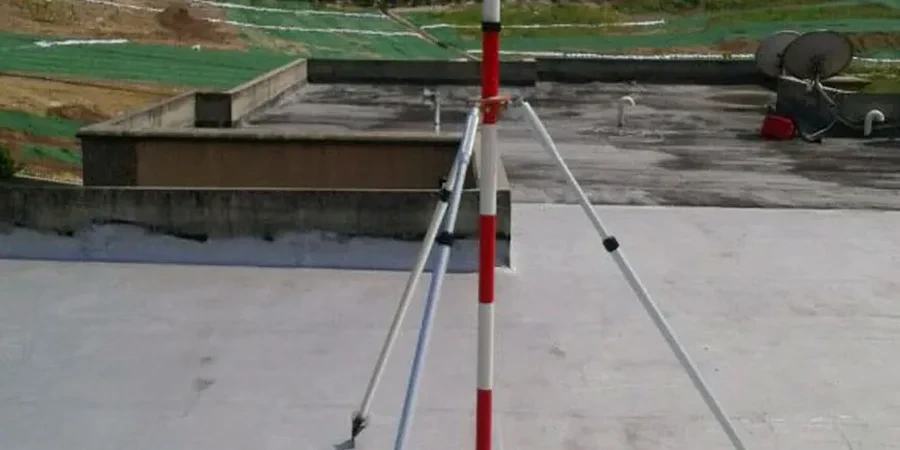
Critical ground factors in Ontario California
Out here, you can’t just watch the shoring soldier piles and call it a day. We often see that the real problem starts two properties over, where a 1950s masonry building sits on spread footings barely eighteen inches wide. The vibration from a hammer attachment carries through Ontario’s dry upper crust and loosens sand lenses under those older footings before anyone notices a crack. Our monitoring plan always includes pre-construction condition surveys and vibration sensors at the property line, tied to the OSMRE-recommended peak particle velocity limits for weak masonry. If the cut exposes a perched water lens nobody mapped during the preliminary borings, the bottom can soften in a single afternoon and lose bearing. That’s why we keep a geologist on rotation who reads the face during each bench cut and flags any change in moisture, color, or cohesion that the instruments might miss.
Our services
Our excavation monitoring packages cover the full dig cycle, from pre-construction surveys to post-backfill settlement verification. Each package is matched to Ontario’s soil variability and the proximity of adjacent structures.
Pre-Excavation Condition Survey
We document existing cracks, tilt, and settlement on all structures within the zone of influence before equipment mobilizes.
Real-Time Shoring Monitoring
Automated total stations and inclinometer strings track lateral movement on soldier pile and tieback systems during each lift.
Groundwater and Pore Pressure Monitoring
Vibrating wire piezometers read pore pressure at multiple depths, especially after storm events or irrigation line breaks.
Vibration and Settlement Monitoring
Geophones at the property line and settlement points on adjacent footings measure the impact of compaction and rock breaking.
Questions and answers
How much does geotechnical excavation monitoring cost for a typical commercial dig in Ontario?
For most commercial excavations in Ontario, monitoring packages run between US$860 and US$2,280 depending on the number of instruments, the duration of the dig, and how many adjacent structures require vibration and settlement tracking.
When does the Ontario building department require an excavation monitoring plan?
The City of Ontario enforces IBC Chapter 33, so a monitoring plan is typically required when a cut exceeds five feet in depth, when the excavation is adjacent to an existing structure, or when the geotechnical report flags soils susceptible to caving or groundwater issues.
What instruments do you install for a deep excavation near the 60 freeway?
We typically install inclinometer casings behind the shoring wall, settlement points on the pavement and adjacent footings, vibrating wire piezometers if groundwater is present, and a total station for automated prism tracking. Vibration monitors go in when rock breaking or heavy compaction runs near the right-of-way.
How often do you report readings during active digging?
During active excavation we collect data every four hours and deliver a summary by end of day. If any reading exceeds 50% of the allowable movement, the system sends an SMS alert immediately so the site team can adjust the dig sequence before the condition worsens.